We began our 5-week journey in Istanbul. Here is an overview of our 5-week itinerary: 3 weeks in Turkey, 1 week in Lebanon, 1 week in Cyprus, and last few days hopping through Athens, Naples, Pompei, and Rome.
Sultanahmet
Why do we begin our journey in Istanbul, and why spend three weeks in Turkey? I spent a lot of time reading about the Byzantine Empire and Church History in the Medieval Age during the pandemic. I also took a trip to Athens in early 2020, and spent the entire day in the Byzantine Museum of Athens, and was fascinated by artifacts from that period of time. My travel to the Middle East that same year also pegged my interest in learning more about the Islamic conquest and the subsequent decline of Christendom in Anatolia and how the Orthodox believers fared under the Ottoman rule.
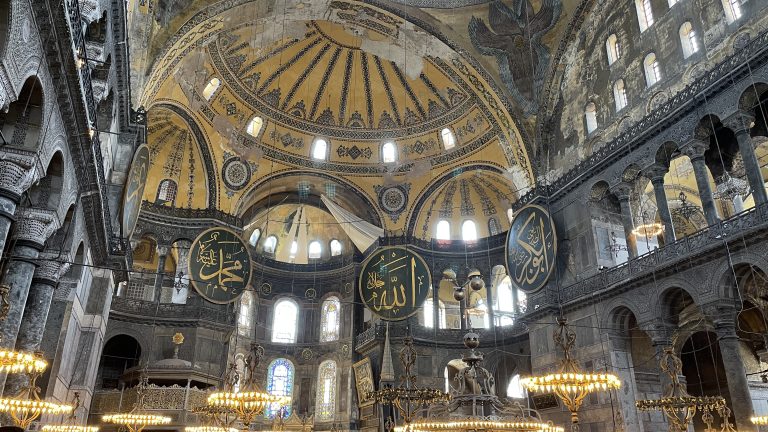
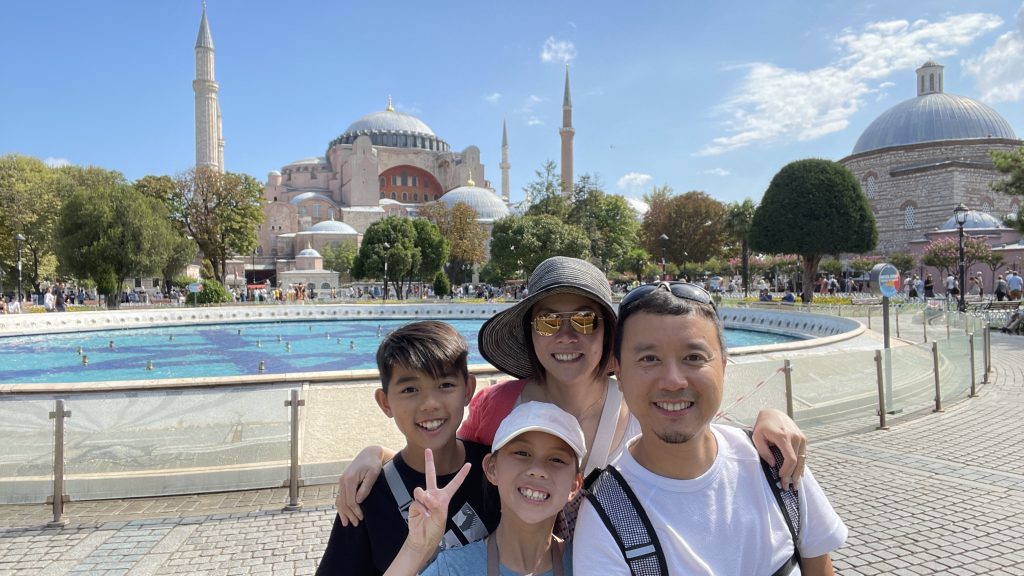
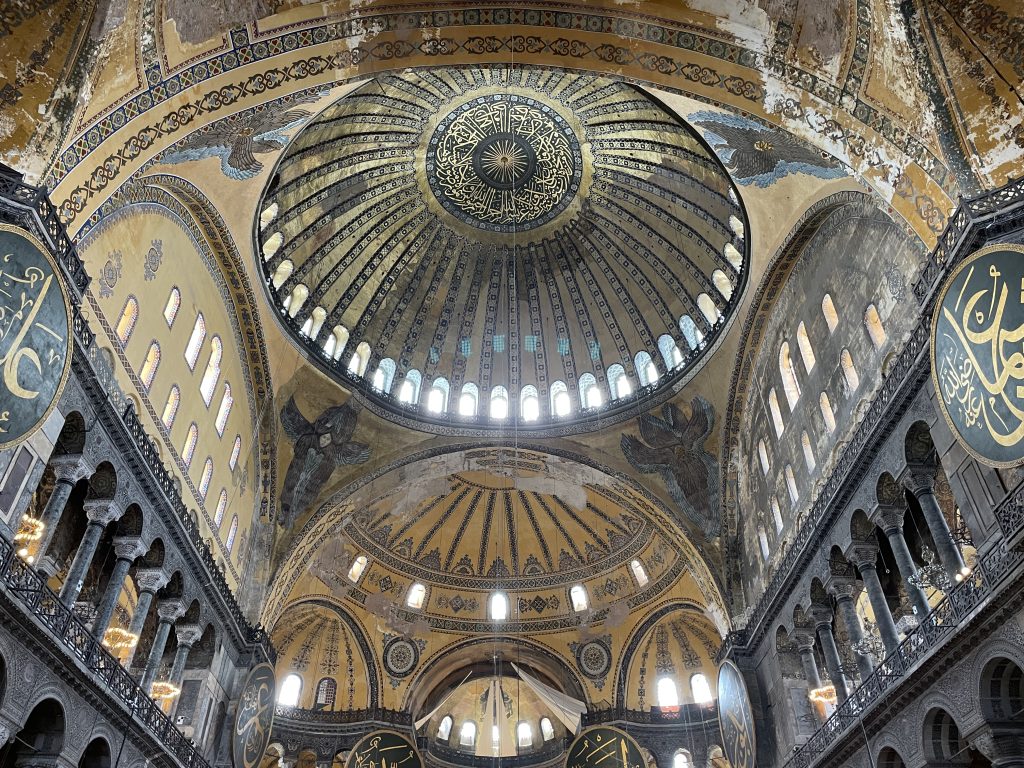
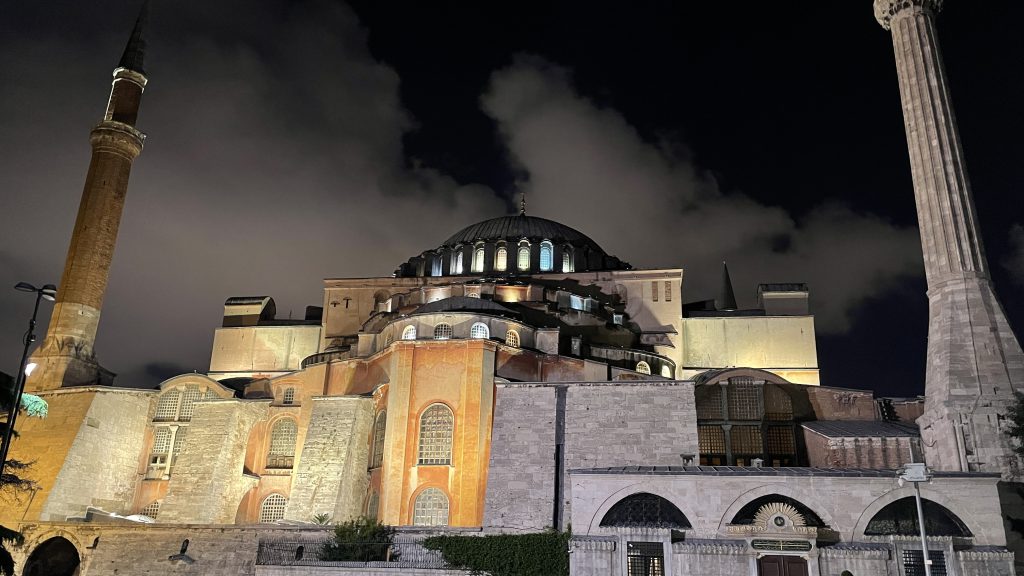
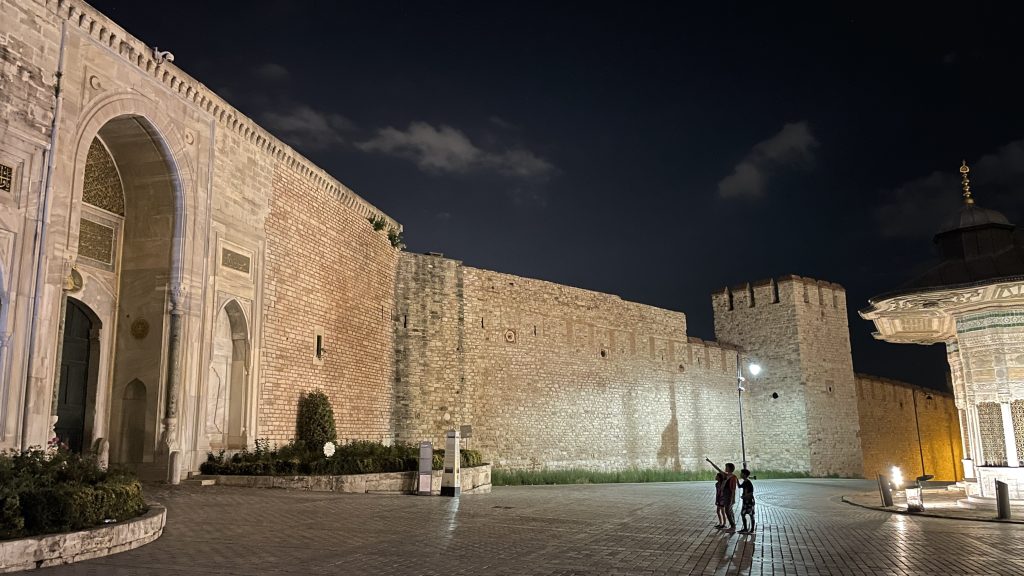
Hagia Sophia (5th century AD) was built by Justinian I after an earlier church built by Constantine the Great was burned down during the Nika Riot. It was the biggest church in the world for a thousand years until Mehmed the Conquerer converted it into a mosque. As the capital of the Byzantine Empire, Constantinople was the center of many major events in church history.The dome of Hagia Sophia was built to convey the heavenly sphere “hovering” over the worship space. This architectural design was later copied in countless Christian basilicas and Muslim mosques all over the world.We walked around Sultanahmet at midnight due to our jet lag. The night view of Hagia Sophia is even more breath-taking.On the other side of Hagia Sophia is the Topkapi Palace. Here Tiffany and the kids are admiring the main gate and the palace wall.
Hagia Irene
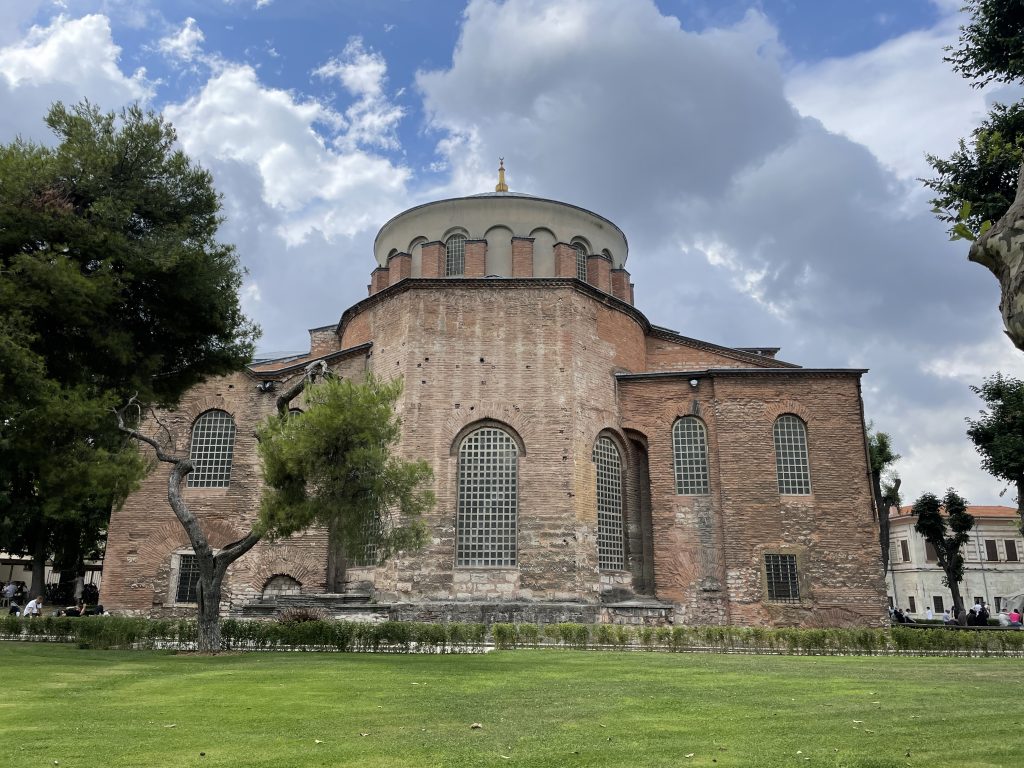
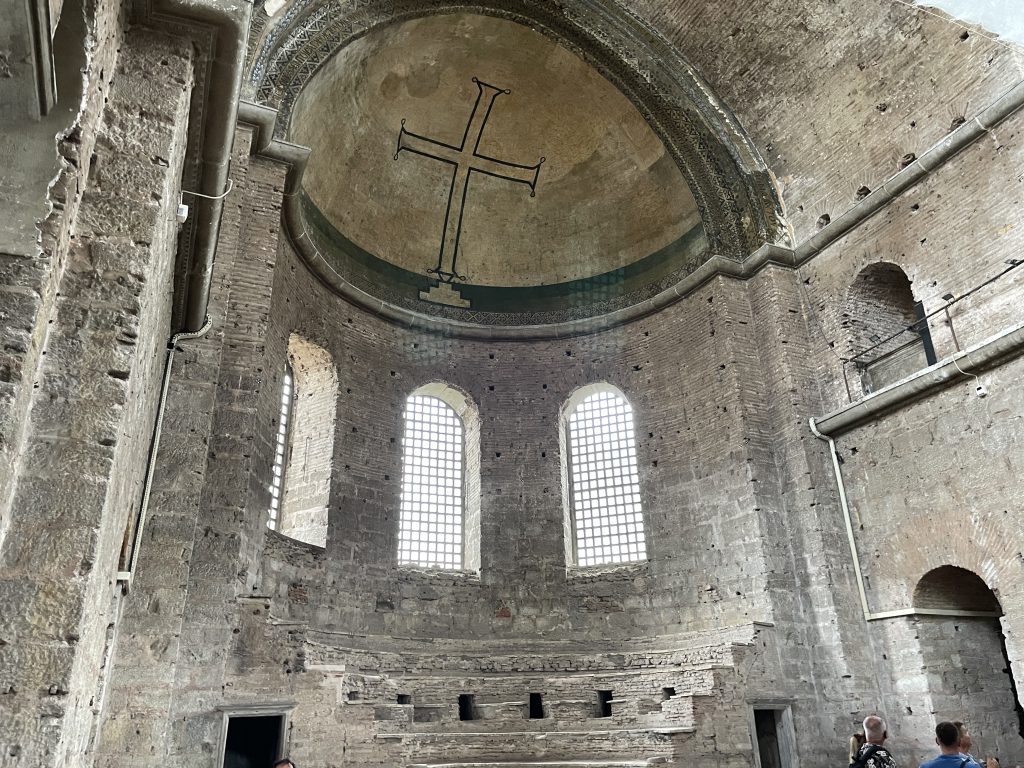
I am pleasantly surprised that Hagia Irene is opened to the public. It was the first church built by Constantine the Great in the 4th century (the current church was rebuilt 2 times) that has never been converted into a mosque.The apse of the church, with a cross from the iconoclastic years. Hagia Irene also holds a synthronon. Synthronons are rows of built benches that are arranged in a semicircle in the apse. During Divine Liturgy this is where the clergy would sit. This is the only synthronon that has survived in the city from the Byzantine era.
The New District
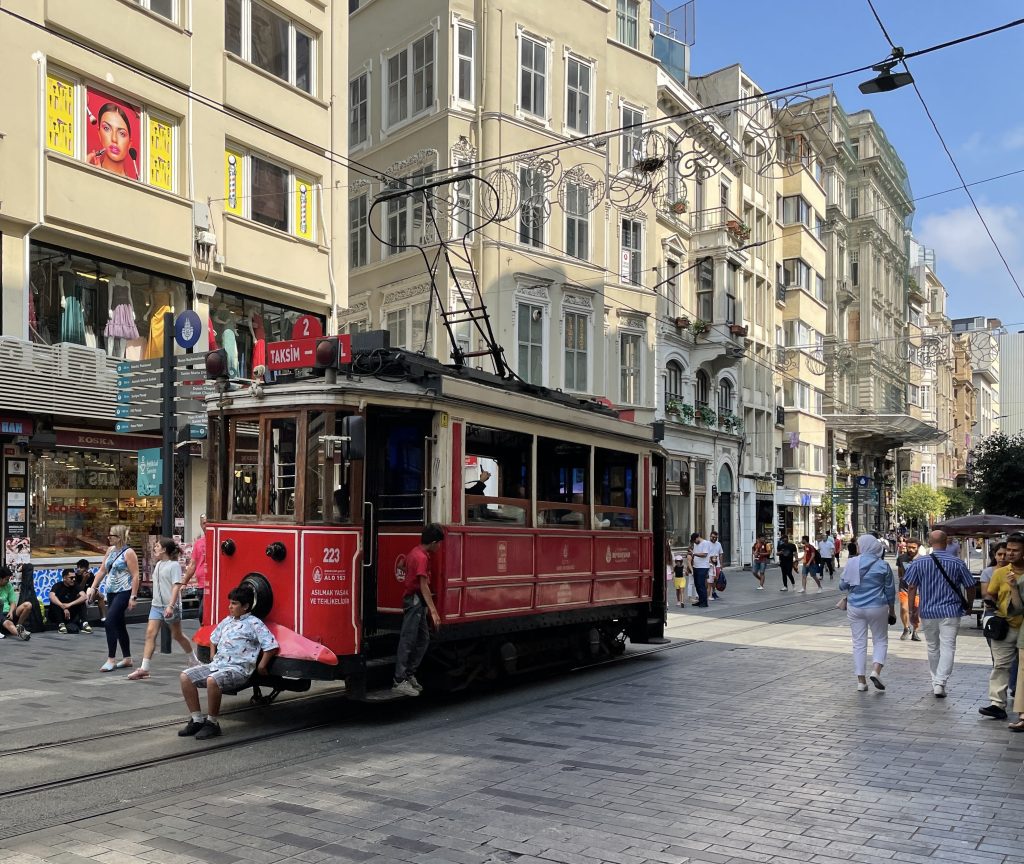
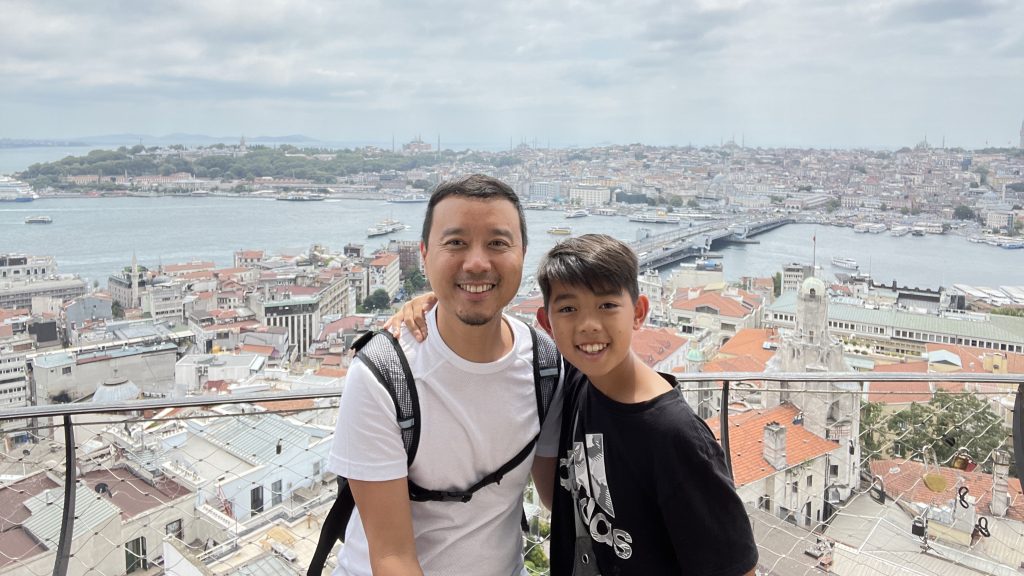
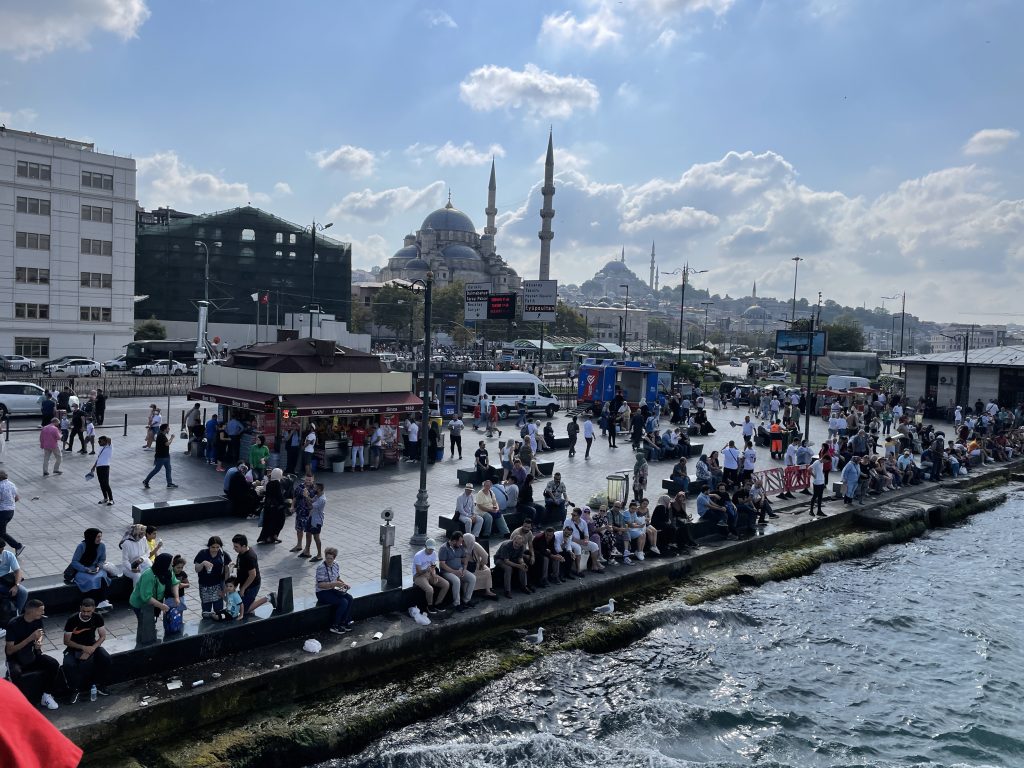
A street car and people walking along the Istikhal CaddesiA panoramic view of Istanbul from the Galata TowerWe embark on a half-day ferry ride along the Bosphorus Strait
Kadikoy
We arrived on the Asia side of Istanbul, in the Kardikoy district. Historically, it was the Christian and Jewish quarter. In modern days, you still see Armenian Church and half a dozen other churches within the city. It also has a vibrant city life and hundreds of eateries. This is the ancient Chalcedon where 520 bishops met in the fourth ecumenical council in 451 to define the dual nature of Christ, where we have the Chalcedonian Creed.
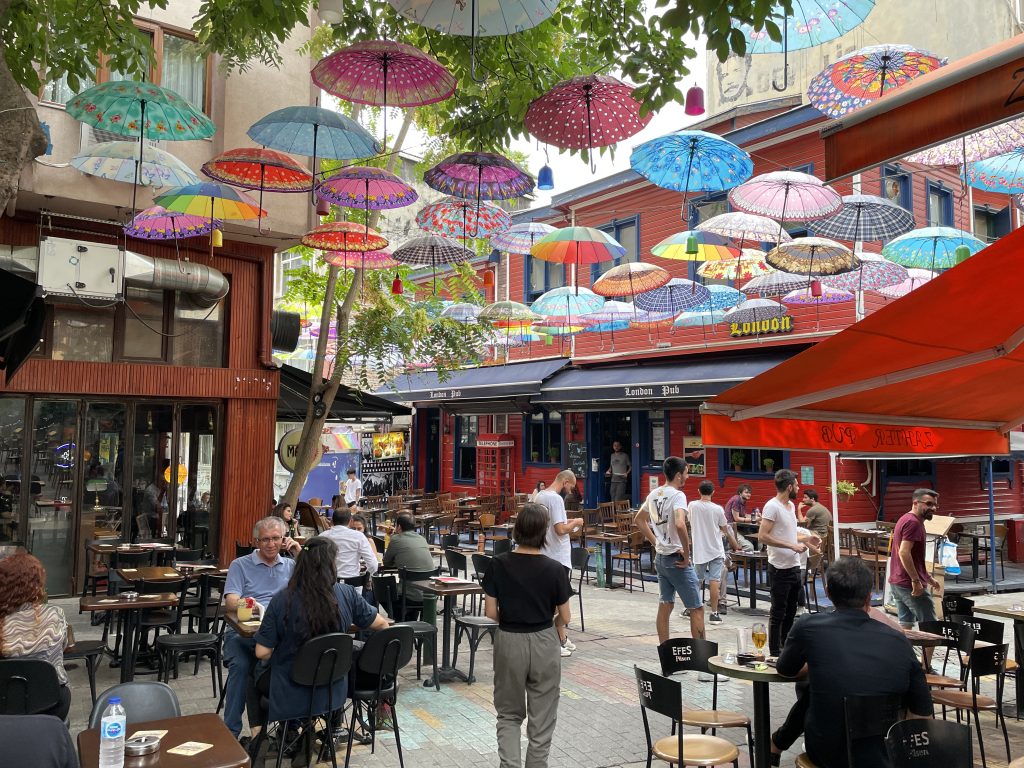
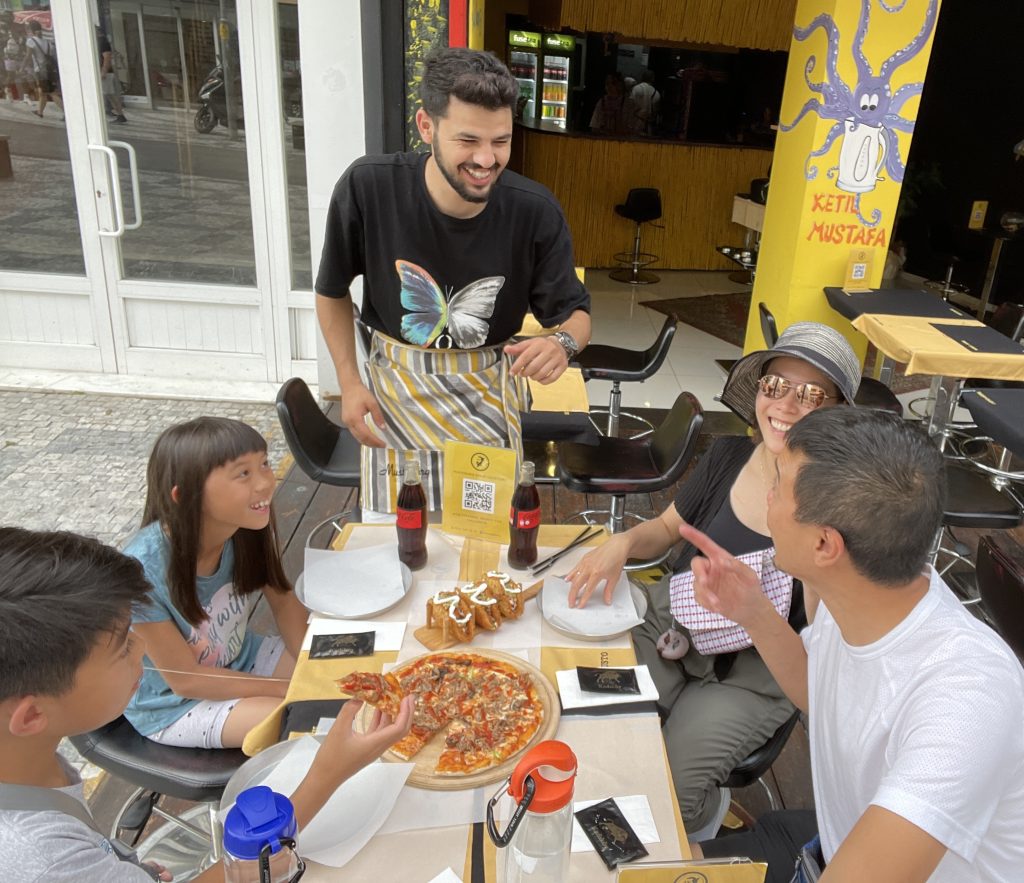
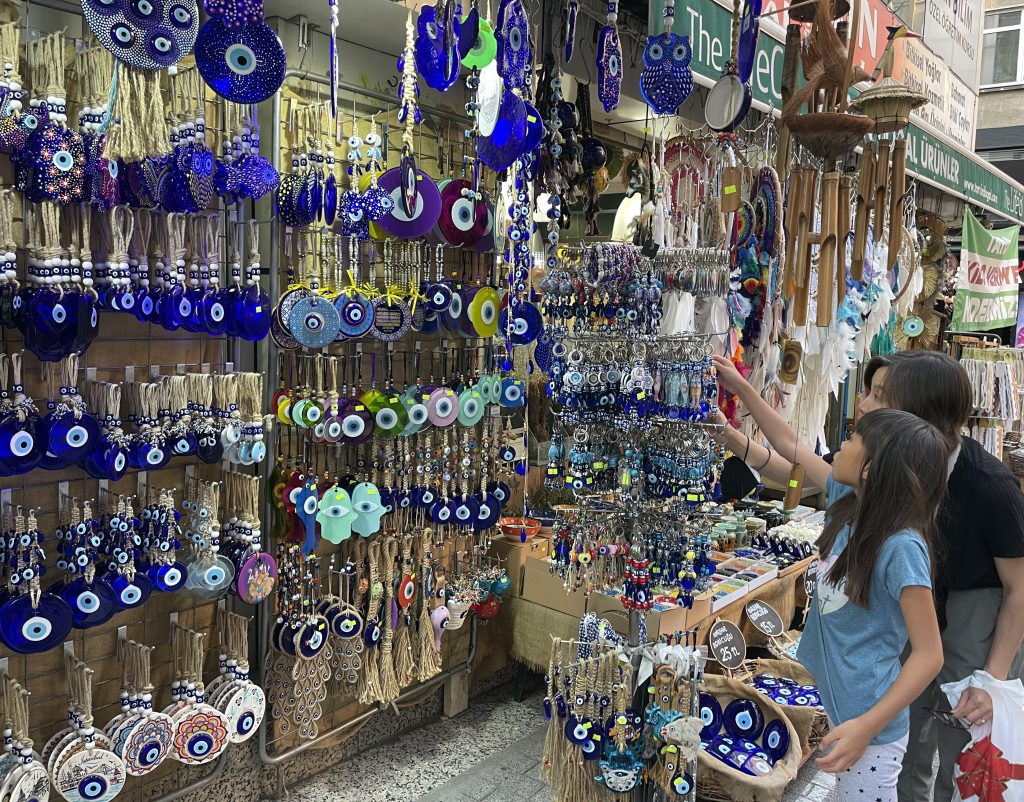
Colorful umbrellas covering a street in downtown KardikoyWe enjoyed eating on the Asia side of Istanbul. Here we are greeted by the owner of a hip pizza joint, who is also a budding TV producer who has a growing crowd of followers on social mediaA craft store selling lots of “evil eye” souvenirs
We are so glad we spent our last day on the more relaxing and local-friendly Asia side. Kadikoy is place where the locals would hang out and shop. We enjoyed some delicious local Turkish street food, such as corbasi (soup), chicken pilaf, and helva (sesame paste dessert). We got a good night of rest in the Khalkedon Hotel before we depart to the airport for our flight to Cappadocia.
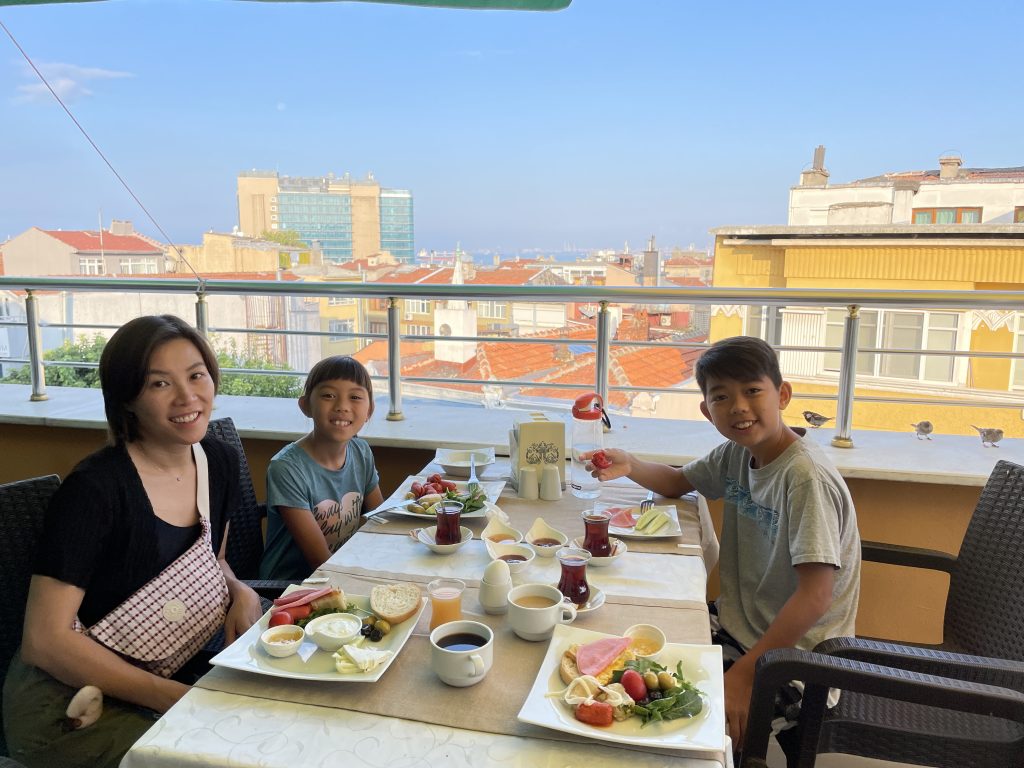
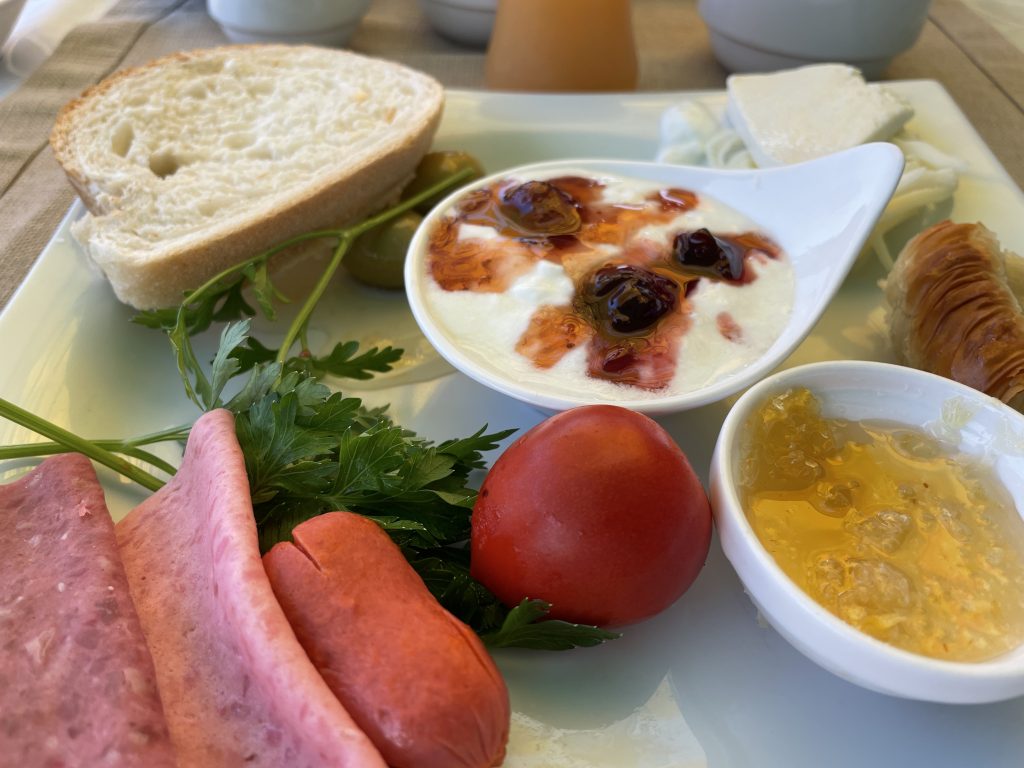
We are enjoying a lovely Turkish breakfast on the rooftop terrace of our hotel in Kadikoy ☕The Turkish breakfast typically includes yogurt with various jam, honey, bread, olives, ham, pastries, cheese, and vegetables. It is always served with Cay (Turkish Tea).